


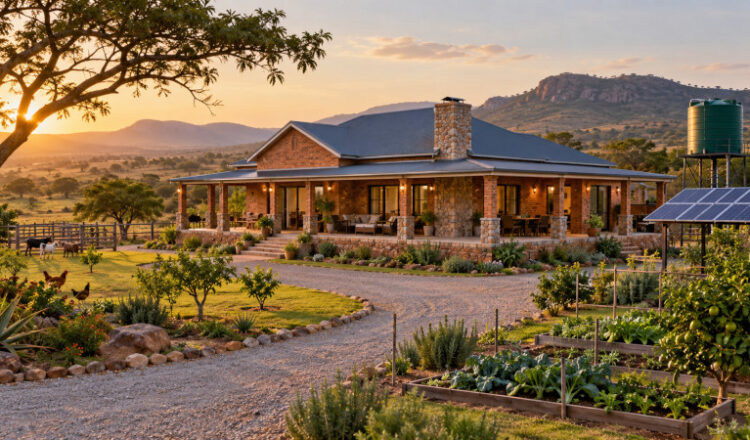
The Rise of the Modern Rural Home: Why More Zimbabweans Are Building Beautiful Houses in Rural Zimbabwe
For generations, the rural home has held a special place in Zimbabwean life. It is where many families trace their roots, where grandparents and extended families live, where family gatherings take place and, for many Zimbabweans, where they ultimately expect to maintain a permanent connection.
What is changing is the type of home people are building there.
Across Zimbabwe, increasingly impressive residential projects are appearing in rural and semi-rural communities. Modern four-bedroom houses, spacious family residences, retirement homes, contemporary farmhouses and even luxury country homes are replacing the perception that sophisticated residential architecture belongs only in the major cities or other urban centres.
The rural home is increasingly changing from a basic family homestead into a modern lifestyle, retirement and investment project.
So what is driving the rise of the modern rural home?
1. Zimbabweans Are Rediscovering the Value of Home
For many people, a rural project is about much more than constructing a building. It represents home, identity and belonging. Someone may spend most of their working life in Harare, Johannesburg, London, Birmingham, Perth or Toronto or some other part of the world, but still maintain a strong connection with their family’s rural home.
As people mature and become more financially established, there is often a desire to develop that home into something substantial. Instead of waiting until retirement to improve the family homestead, many people are beginning these projects much earlier. The result is a new generation of rural homes designed not merely as occasional places to visit, but as comfortable residences where families can spend weekends, holidays and eventually longer periods.
2. Rural Land Can Be Much More Affordable
One of the biggest reasons people are reconsidering rural construction is the cost of land. Residential stands in major urban areas can represent a substantial portion of the total cost of building a home. In some sought-after suburbs and new developments, a buyer may have to commit tens of thousands of dollars to purchasing the stand before construction even begins.
For many families, this means that a significant amount of their available capital is spent simply acquiring land. The situation can be very different in rural areas. Some Zimbabweans already have access to family land or a rural homestead through longstanding family and customary arrangements. In other cases, acquiring the right to occupy and develop land in an appropriate rural setting may be considerably less expensive than purchasing a conventional residential stand in a major city.
For someone who already has access to family land, this can transform the economics of the project. Instead of spending a large portion of the budget purchasing an urban stand, more of the available money can potentially be directed towards:
- constructing a larger house;
- improving the quality of finishes;
- installing solar power;
- drilling a borehole where feasible;
- providing water-storage infrastructure;
- landscaping;
- developing cottages or guest accommodation; or
- investing in productive projects around the home.
This is one reason why some impressive houses are now appearing in rural Zimbabwe. A homeowner who might only afford a modest house after purchasing an expensive urban stand may be able to construct a much more substantial residence where suitable family land is already available.
There is, however, an important distinction.
Family or customary access to rural land should not automatically be treated in the same way as ownership of a titled urban residential stand. The legal and customary arrangements governing rural and communal land can differ significantly.
Anyone planning to invest substantial amounts in a rural construction project should therefore first establish that they have the appropriate right to occupy and develop the particular land.
3. Rural Land Often Provides More Space
Affordability is only part of the attraction. Rural properties can also offer something becoming increasingly difficult to obtain in many urban developments: space.
Many new urban residential stands are relatively compact. Homeowners must carefully balance the size of the house with parking, gardens, outdoor entertainment areas and required building lines. A rural setting can offer a completely different opportunity.
Depending on the property and applicable land-use arrangements, there may be enough space for:
- a large family residence;
- generous verandas and entertainment areas;
- landscaped gardens;
- orchards and vegetable gardens;
- accommodation for extended family;
- guest cottages;
- outdoor kitchens;
- borehole and water-storage infrastructure;
- poultry or livestock projects; and
- future additions to the property.
This gives architects and homeowners greater freedom when planning the property. A rural project can therefore become much more than a house. It can become a complete family estate.
4. The Diaspora Is Playing an Important Role
Zimbabweans living abroad are also having a major influence on property development back home. For someone who has spent years living and working in the diaspora, constructing a permanent home in Zimbabwe can provide something tangible from years of hard work.
Many diaspora Zimbabweans also already have access to a family rural home. This can make a rural project particularly attractive. Instead of first having to purchase an expensive stand in Harare or another city, they may be able to direct a much greater proportion of their investment towards the actual house and supporting infrastructure.
5. Modern Technology Has Changed What Rural Living Can Look Like
The difference between urban and rural living is also becoming smaller in some respects. Solar energy has made it possible for homeowners to develop substantial independent power systems. Boreholes, pumps, water tanks and filtration systems can provide reliable domestic water solutions where suitable groundwater is available. Satellite and wireless technologies have also made internet connectivity possible in locations where conventional fixed-line infrastructure may be limited.
For homeowners who can invest in these technologies, the possibilities are considerable. A properly designed rural home can have:
Solar power.
Running water.
Internet connectivity.
Modern kitchens.
Contemporary bathrooms.
Security systems.
Home offices.
Entertainment spaces.
Choosing a rural setting therefore does not necessarily mean giving up the conveniences associated with a modern home. In some cases, a carefully designed rural property can actually become more self-sufficient than an urban residence.
6. Remote and Flexible Working Have Changed People’s Thinking
Another important shift is the way people think about where they need to live. Where reliable power and connectivity are available, some professionals and business owners can perform at least part of their work remotely. This creates the possibility of spending more time away from crowded urban environments.
For some homeowners, the rural house is consequently changing from somewhere they visit a few times per year into a genuine second home.
7. Modern Architecture Is Changing the Image of the Rural Home
Perhaps one of the most visible changes is architectural. There is no reason why a beautiful contemporary house should only be constructed in Borrowdale, Mount Pleasant, Madokero or another urban suburb. A well-designed house can be built in Murewa, Mutoko, Gutu, Chivi, Buhera, Wedza, Gokwe, Guruve, Lupane, Tsholotsho or virtually any other part of Zimbabwe where the relevant land-use and building requirements allow it.
The surrounding rural landscape can actually enhance these homes. A good designer can orient the house to capture views, natural light, prevailing winds and the character of the surrounding environment.
8. Rural Properties Can Combine Residential Living With Economic Activity
Unlike many urban residential stands, rural properties may also provide opportunities for productive activities where the relevant land-use arrangements permit them. A household may combine its residence with activities such as:
- horticulture;
- poultry;
- livestock;
- orchards;
- beekeeping;
- small-scale farming; or
- other family enterprises.
The property therefore becomes more than somewhere to sleep. It can become both a home and a productive asset. For diaspora investors in particular, the attraction can be both emotional and economic, developing something at home while creating a sustainable source of income and maintaining the possibility of eventually living there.
9. Building a Legacy for the Next Generation
There is something deeply long-term about constructing a permanent family home. Urban properties may be bought and sold as circumstances change. The rural family home is often viewed differently. It can become the place where children understand their roots, where relatives gather during holidays, where significant family occasions take place and where future generations retain a connection with their family history.
For this reason, some homeowners are deliberately investing in high-quality construction rather than treating a rural house as a temporary or secondary structure. They are building homes designed to serve the family for decades.
10. A Rural House Still Requires Professional Planning
One mistake homeowners should avoid is assuming that because a house is being constructed in a rural area, professional planning is unnecessary. A substantial rural home still requires careful consideration of:
- architectural design
- structural integrity
- foundations and soil conditions
- drainage
- water supply
- wastewater and sanitation systems
- electrical and solar installations
- material procurement
- access for construction vehicles
- transportation of materials
- security of materials on site
- contractor supervision and
- overall project management.
In fact, construction in a remote location can sometimes require more planning, because materials, labour and equipment may need to travel considerable distances. A truck arriving without all the required materials can be a minor inconvenience on a Harare construction site. On a remote site, the same mistake can affect the programme and significantly increase transportation costs.
Good logistics therefore become an important part of the project.
12. Understand Your Land Rights Before You Build
The term rural property can describe different land-tenure arrangements in Zimbabwe. Some families may have inherited access to a homestead through customary family arrangements, but this should not automatically be understood as holding individual title in the same manner as a conventional urban property.
Before investing heavily in construction, homeowners should establish:
- who has recognised rights over the land
- whether family or traditional processes have been properly followed
- what role the relevant Rural District Council may have
- whether development permission is required and
- whether there are any restrictions affecting the proposed project.
Do not allow the relatively low cost of acquiring rural land to encourage you to skip due diligence.
The house may eventually cost far more than the land itself. Make sure your right to build there is properly established before committing significant construction funds. We all know the fate of many so called Sabhuku Deals
The Rural Home Is No Longer an Afterthought
Zimbabwe’s rural housing story is changing. For a growing number of families, the rural home is no longer simply a small house that receives attention after the main urban residence has been completed. It is becoming a deliberate investment as a result of:
A lifestyle choice.
A retirement strategy.
A decision to create a sustainable economic activity.
And, perhaps most importantly, a family legacy.
The relatively high cost of urban residential stands has made many families reconsider land they already have access to. When that affordability is combined with greater space, modern architecture, solar power, improved connectivity and better water solutions, rural construction begins to make considerable sense.
The question is no longer:
“Why would you build such a beautiful house in the rural areas?”
Increasingly, the question is:
“If the land is available, the space is there and modern living is possible, why shouldn’t you?”
Planning Your Own Rural Project?
At Novus Habitat Africa, we believe that location should never limit the quality of your dream. Whether you are planning a modest family home, a modern rural residence, a retirement property, a farmhouse or a larger family estate, your project deserves the same level of professional planning, construction management and attention to detail as any urban development.
We can help coordinate your journey from concept and architectural design through budgeting, procurement, construction, project management and final handover.
And if you are living in the diaspora, you do not have to postpone your dream simply because you are thousands of kilometres away. Novus Habitat Africa can provide professional project oversight on the ground, helping you turn your vision back home into a properly planned and managed construction project.
Thinking of building kumusha?
Talk to Novus Habitat Africa and let us help you create a rural home that combines your roots with the comfort, functionality and beauty of modern living.
Novus Habitat Africa — Building Beautiful Homes, Wherever Home Is. Call/App +263 712 042 248
Leave a Comment